
Why we all need a Second Brain
Exploring the science of collaboration.

If you want to go fast, go alone; if you want to go far, go together - Proverb
Hello and welcome to the very first Second Brain Newsletter: ‘Why Am I Like This?’ where we explore ideas from philosophy and psychology to think more deeply about the common experiences of our clients and ourselves.
For this one we’ve been busy exploring the science behind collaboration and the benefits of working with others. We’ve found so much evidence to show that overwhelm, stress, and struggling with a lack of ideas are actually very natural responses to working alone. So it’s not just you. Going it alone is hard.
We were also reminded of the myriad ways in which we’re fundamentally designed to work with other humans, and why we need a Second Brain.
We’re not designed to do things on our own.
We are social beings. We evolved that way because cooperation gives us a better chance at survival. Our biological need for connection has led to all the good stuff - language, empathy, cultural evolution.
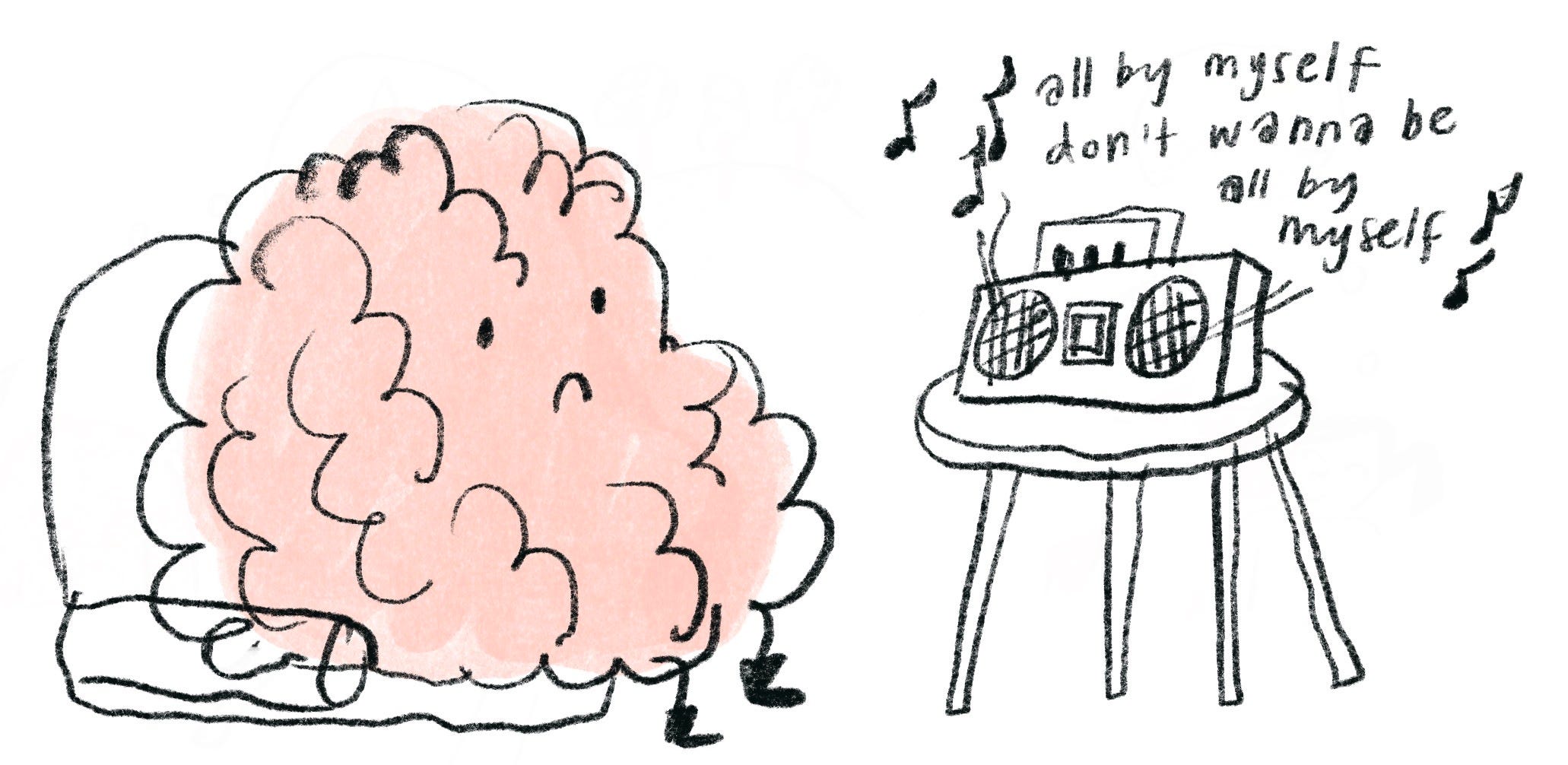
You might have been drawn to launching a business precisely because you want to do things your way but that doesn’t mean you have to work on your own all the time — in fact the science shows us that it’s better if you don’t.
We’re meant to co-operate not isolate.
It’s obvious that having a Second Brain means more problem solving power. If you ask someone else for input you get double the perspective, twice the ideas and can usually solve problems faster. But that’s just the start.
Social Baseline Theory tells us that your brain expects to work with others. It is wired that way.
This makes working alone costly — it carries an increased mental, physical and energetic load. In other words, it’s stressful and draining. But when you work with others, you automatically share that load, allowing you to work more efficiently.
Social Baseline Theory also suggests that when you meet challenges alone, you will feel like they are harder than they are.
In 2008 Simone Schnall published a study that asked participants to judge the steepness of a hill. What she found was that the participants saw the hill as less steep than it actually was when they were accompanied by a friend, but when they looked at the hill with someone they didn’t like — without perceived support — they saw it as steeper than it really was.
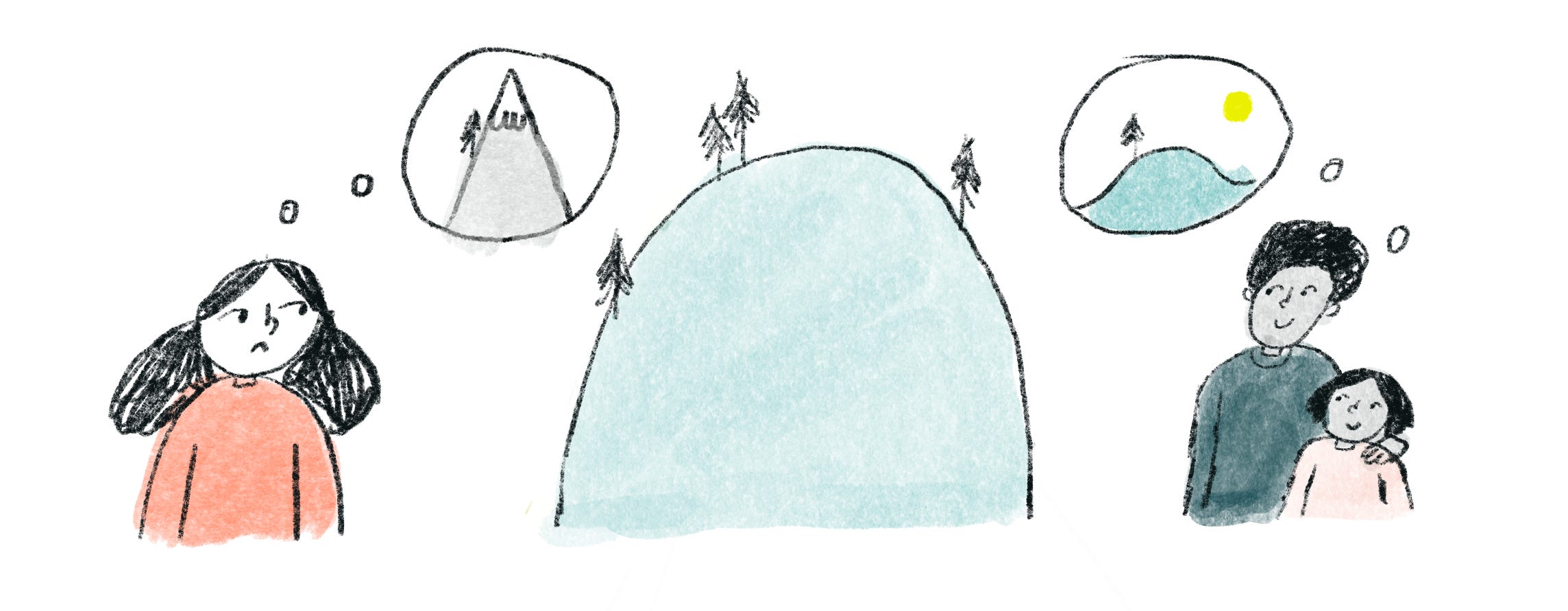
So a Second Brain not only makes things easier (by sharing the load) it also makes things feel easier, which is no small thing. Perceiving something to be possible is at least half the battle.
Learning is a social process.
Most clients come to us lacking clarity. But clarity can only come from understanding. And to gain understanding you need a Second Brain — someone to explain your ideas to and to reflect your ideas back to you.
The psychologist Vygotsky argued that learning is a social process, not an individual one. Interaction comes before independent thought, a baby learns language through interaction and that language shapes their thinking.
It’s also why the western education system is structured like it is - we don’t just learn by ourselves, we go to school where a teacher teaches a concept and then asks questions. In answering, students explain what they know and in doing so build their own understanding. This works because articulating your thinking in real time forces knowledge into order, reveals gaps in your understanding, and opens up new connections.
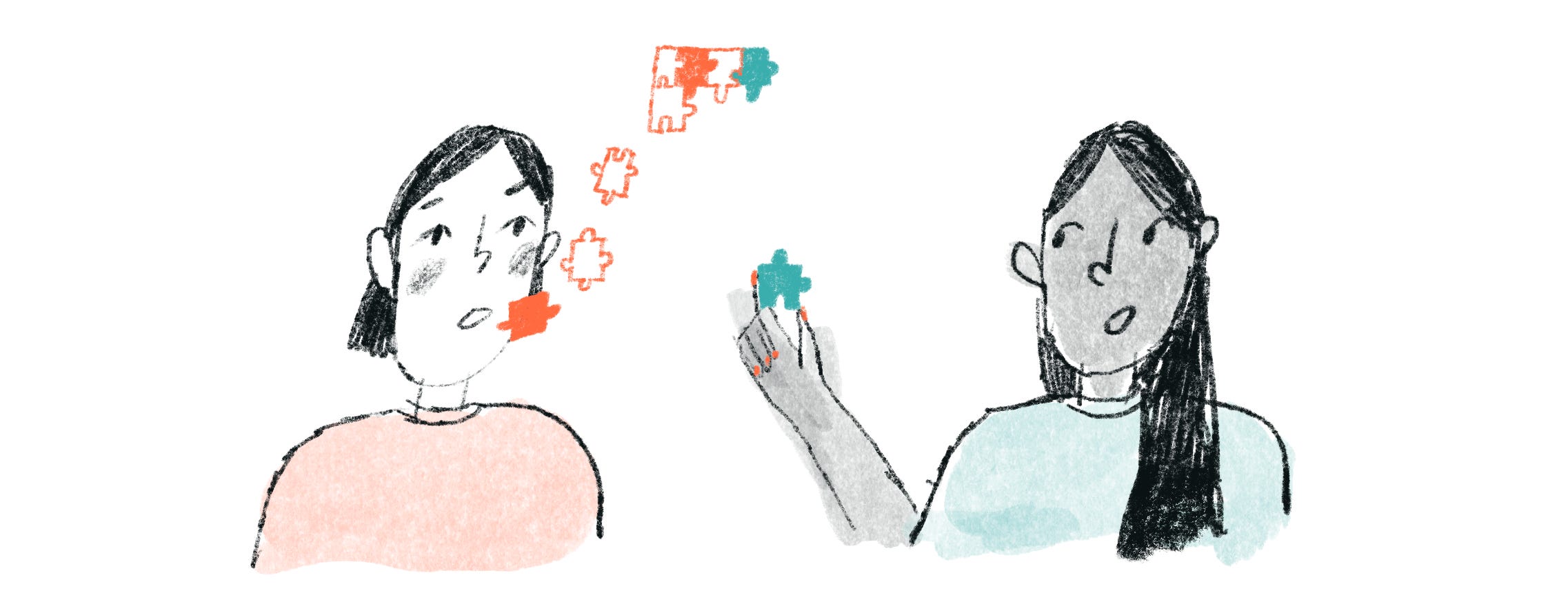
Working with someone else supercharges your brain.
In 1998 Andy Clark and David Chalmers published a paper suggesting that the mind isn’t confined to the skull. The notebook where you write down your business ideas, the person that you share your thoughts with, they aren’t just external tools — they actually form part of your memory system.
When you share your thoughts or business ideas with someone else, the other person becomes part of your cognitive process; their thoughts shape your reasoning, their brain supplements yours, their perspective restructures your thinking. You borrow their brain and use it to expand your own.
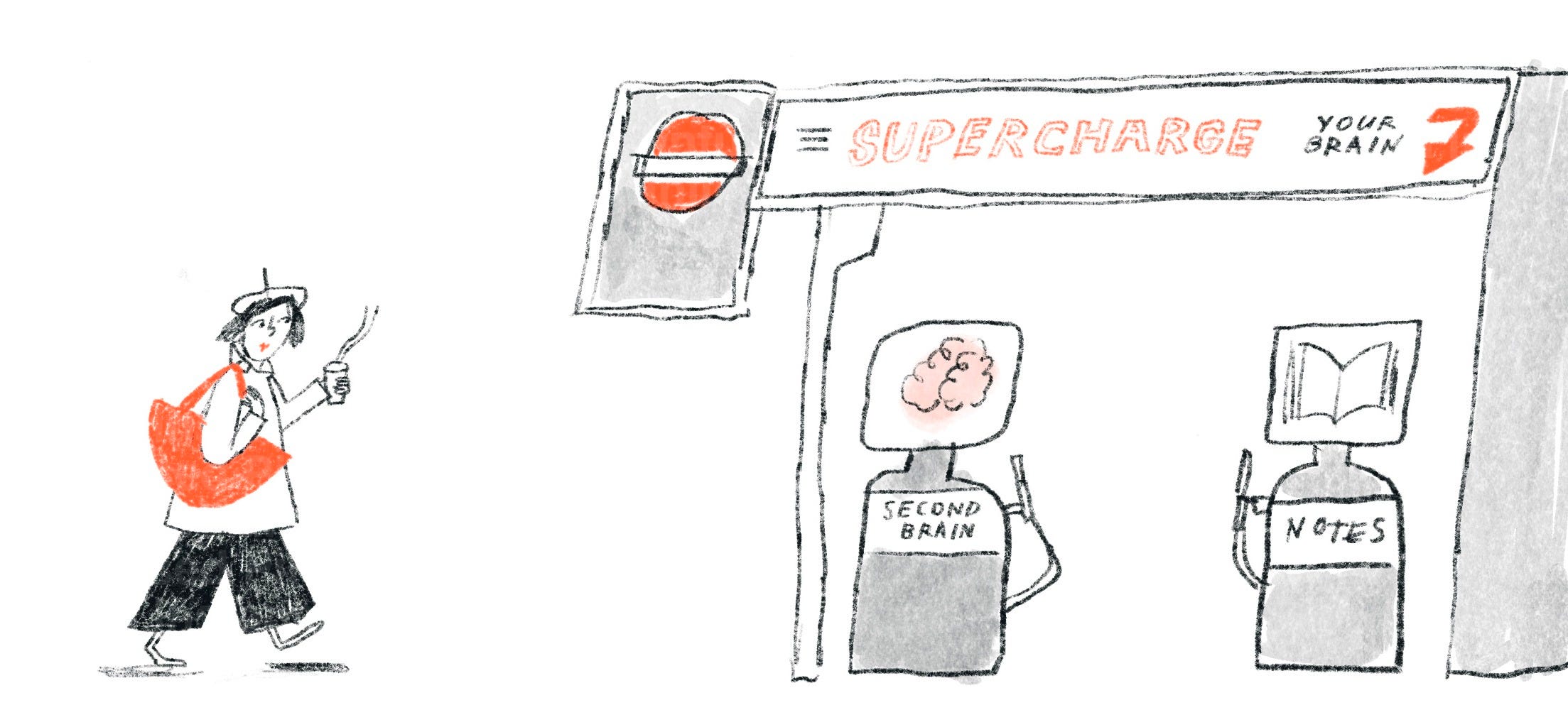
This is how Second Brain Coaching works. We lend our brains to our clients so they can supercharge their understanding of their business (and often themselves). We ask questions, we listen, we reflect back and offer new perspectives, thoughts and ideas.
Through this process our clients gain clarity and get to see their business through fresh eyes. It’s not magic — although it can feel that way — it’s psychology.
Book in time with a Second Brain.
If you’ve been toiling away on your own, feeling stuck, overwhelmed or unenthusiastic about your business and you’d like to supercharge your work with the power of a Second Brain, get in touch below.
A little update from SB HQ.
These are golden days for sports fans what with the Football World Cup, Cricket and Tennis all converging in perfect alignment. We are both big lovers of sport, but managed to tear ourselves away from the multi-screen action to meet up in York for the day. We live and work 200 miles apart and usually meet online but getting face-to-face time Second Braining is like sprinkling fairy dust onto proceedings. We got so much done, worked through some tasks that required a LOT of brain power and still had time to eat delicious food and enjoy the sights. Hurrah for Second Brains!
Subscribe to keep getting a Second Brain boost in your inbox.
The brains behind the theory in this newsletter:
Cherry, K. (2023, March 12). What is a schema in psychology? Verywell Mind. https://www.verywellmind.com/what-is-a-schema-2795873.
Clark, A., & Chalmers, D. (1998). The extended mind. Analysis, 58(1), 7–19.
Coan, James A., and David A. Sbarra. “Social Baseline Theory: The Social Regulation of Risk and Effort.” Social and Personality Psychology Compass, vol. 9, no. 9, 2015, pp. 498–509.
Howard, S., & Wynne, K. (2025). Skills in psychodynamic counselling & psychotherapy (3rd ed.). SAGE.
Kagan S. (2014). Kagan structures, processing, and excellence in college teaching. Journal on Excellence in College Teaching, (3–4), 119–138.
The Open University. (n.d.). Understanding language and learning: Section 5 – Learning language and mental development: an introduction to Vygotsky. OpenLearn. https://www.open.edu/openlearn/languages/understanding-language-and-learning/content-section-5.
Vygotsky, L. S. (1978). Mind in society: The development of higher psychological processes (M. Cole, V. John-Steiner, S. Scribner & E. Souberman, Eds.). Harvard University Press.